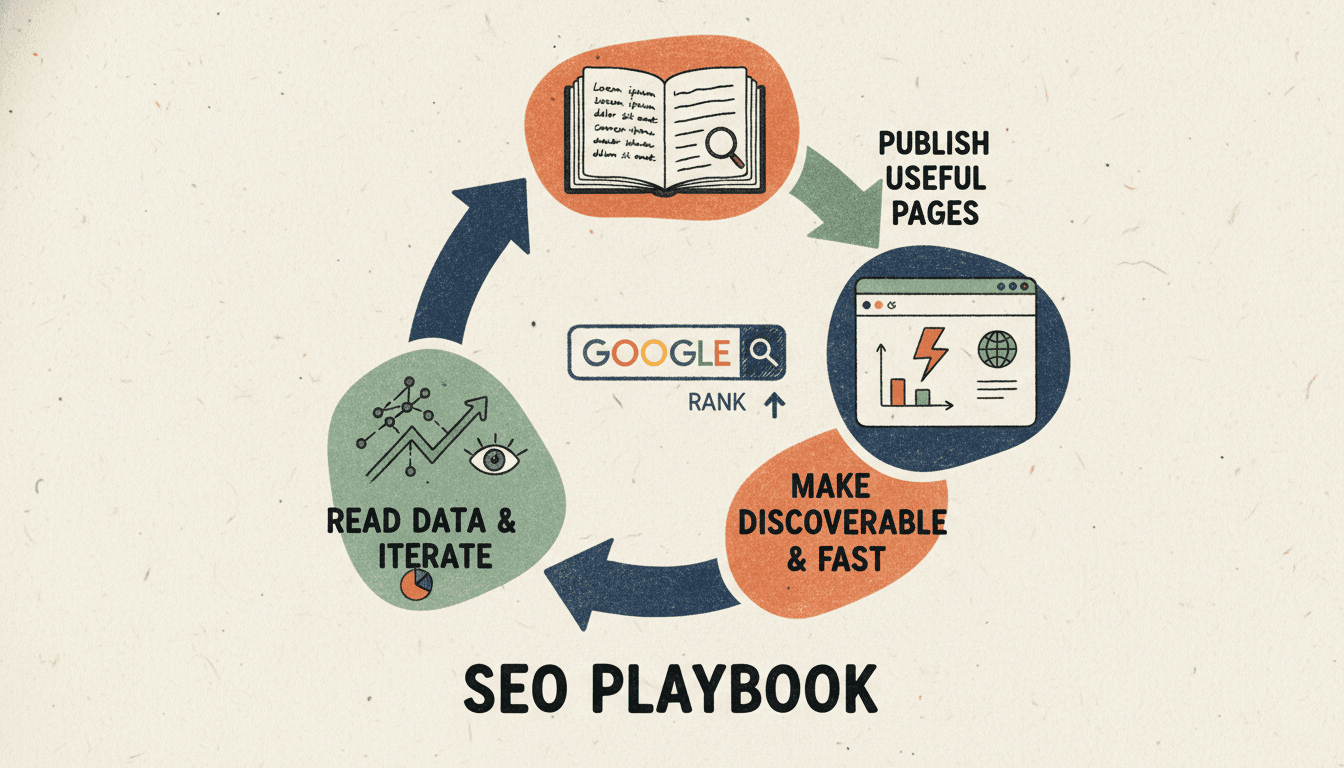
Search visibility is rarely one silver bullet. Teams that win treat SEO as a loop: publish useful pages, make them discoverable and fast, then read the data and iterate. Below is a tight playbook you can run without a huge agency retainer.
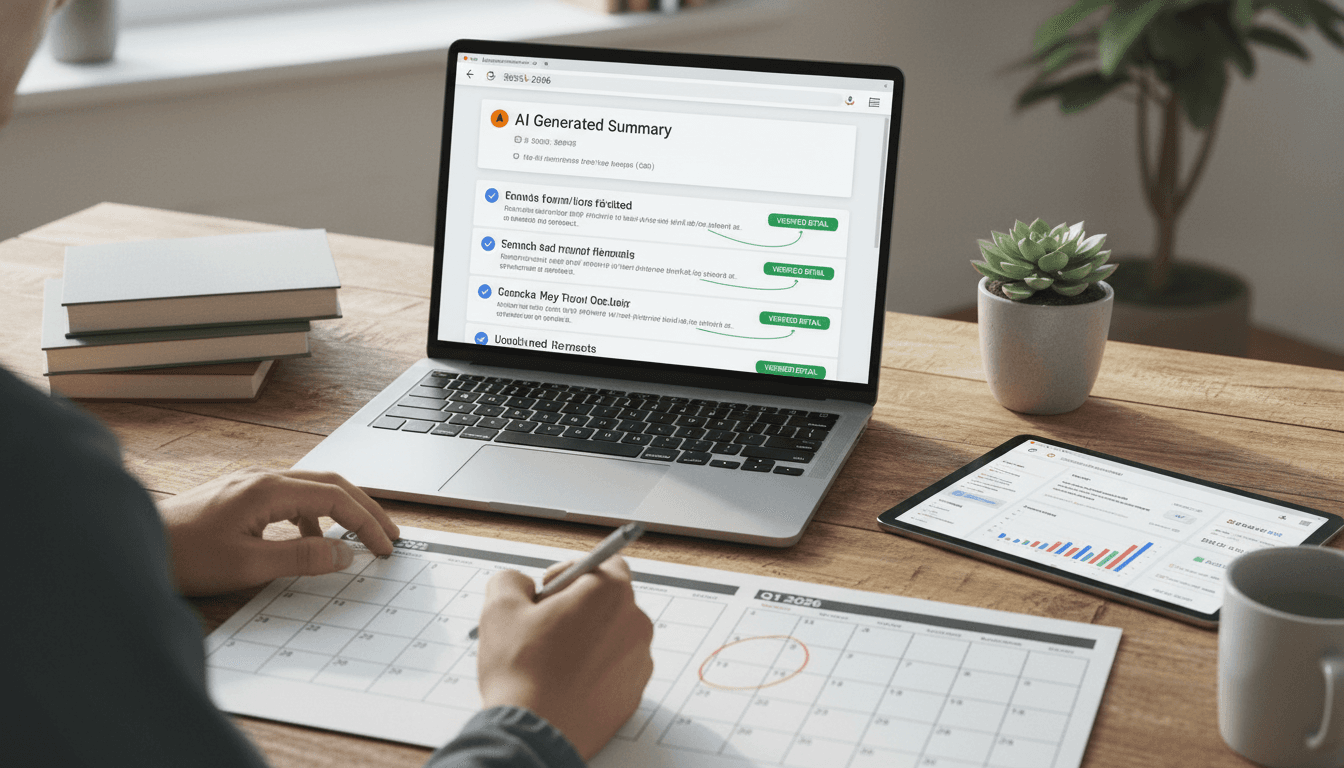
Across 2025 and into 2026, AI summaries and changing SERP layouts reward clear answers, strong internal linking, and pages that cite verifiable detail—not keyword-stuffed blurbs. Plan quarterly content reviews so publish dates, stats, and screenshots stay credible.
Introduction
Google rewards sites that consistently answer intent, load quickly, and prove trust. Your job is to align content, information architecture, and technical health so crawlers and humans agree your page is the best answer for a query.
1. Focus on High-Quality Content
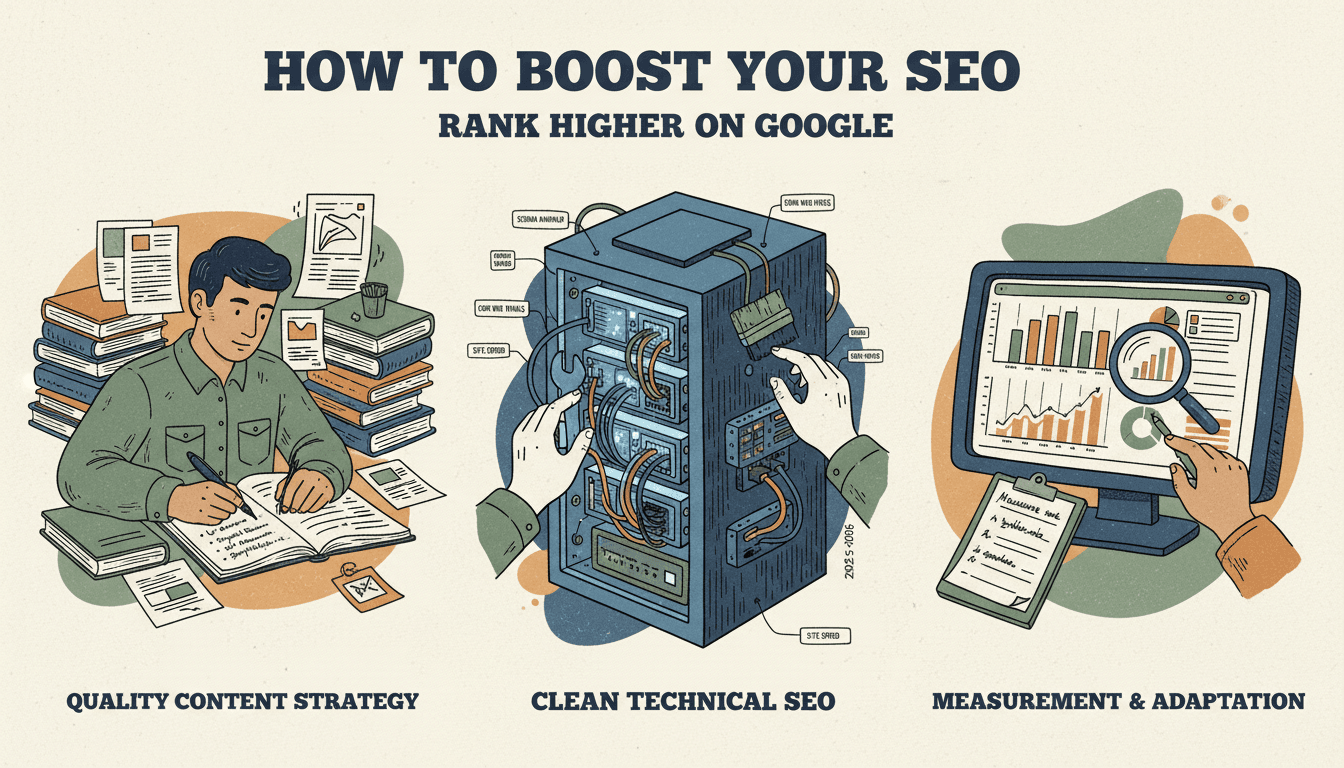
Start with one primary question per page. Structure headings so scanners get the answer fast, then deepen with examples, data, and internal links to related coverage.
- Match search intent before you optimize titles—informational vs transactional pages need different angles.
- Use descriptive H2/H3s; avoid keyword stuffing; write for humans first.
- Refresh evergreen posts on a schedule; stale dates and broken examples hurt trust.
2. Strengthen Technical Foundations
Clean URLs, stable redirects, indexable canonicals, and valid structured data reduce noise in Search Console. Pair that with honest Core Web Vitals work—not lazy script bundles on marketing pages.
- Fix crawl errors and soft 404s; keep XML sitemaps current.
- Use lazy loading and right-sized images; watch LCP on mobile.
- Instrument analytics and Search Console; review queries monthly.
3. Earn Signals, Don’t Chase Shortcuts
Sustainable rankings come from helpful content, clear entities, and real mentions—not from low-quality link schemes. Invest in case studies, partner pages, and PR that humans actually want to cite.
- Build internal links from high-traffic pages to new deep content.
- Claim and maintain brand profiles; keep NAP consistent where relevant.
- Disavow spam only when necessary; default to improving on-site quality.
Conclusion
SEO is maintenance: ship, measure, refine. If you align content with intent, keep the technical floor high, and review performance regularly, upward movement on Google becomes a predictable outcome of good habits—not a one-off project. Budget 2026 experiments (canonical tagging, FAQ/schema where honest) against a baseline you established in late 2025 so you know what actually moved impressions.
How operators translate this into delivery
When initiatives touch how to boost your seo and rank higher on google, the bottleneck is rarely syntax—it is clarity on ownership, budgets, and definitions of done. Schedule explicit checkpoints between product marketing, engineering, and security so nobody discovers mismatched assumptions during launch week. Prefer thin slices that prove instrumentation and rollback before you widen scope; that discipline is what Search and internal wikis reward in 2026 when people look for authoritative write-ups tied to how to boost your seo on google.
Finance and compliance teams increasingly ask how work tied to organic visibility, crawl hygiene, conversions, and editorial systems that survive algorithm and AI-overview changes maps to ROI. Keep a living one-pager with baseline metrics (conversion paths, incident rate, deployment interval, ticket age) so you can attribute improvements to specific releases—not to vanity dashboards. Capture architecture notes and threat-model fragments where new teammates search first; ambiguity there becomes expensive production risk later.
Alignment questions to answer early
- Who signs off when how to boost your seo and rank higher on google affects customer data or SLAs—and on what cadence do they review drift?
- Which environments must mirror production telemetry (including synthetic checks) before executives greenlight rollout?
- What single metric or qualitative signal rolls up to leadership so progress is legible without cherry-picking?
- Where will operators look up the canonical runbook six months from now—wiki, ticketing, or chat—and who keeps it fresh?
Measurement, documentation, and long-term SEO value
Treat this page as living documentation: refresh examples, screenshots, and statistics on a predictable schedule so search engines and coworkers see freshness. Internal search and external search both reward specificity—link to sibling posts in the toolwork.dev blog cluster when concepts overlap (how to boost your seo on google adjacent topics belong in context). When AI-generated summaries appear on SERPs, concise headings and factual bullets increase the odds your narrative survives extraction faithfully.
If your roadmap stacks multiple bets (organic visibility, crawl hygiene, conversions, and editorial systems that survive algorithm and AI-overview changes), sequence them so analytics and logs prove each layer before you pile on complexity. Escalate exceptions early—latency regressions, crawl anomalies, OAuth scopes widening—rather than patching silently; institutional memory decays faster than code churn.